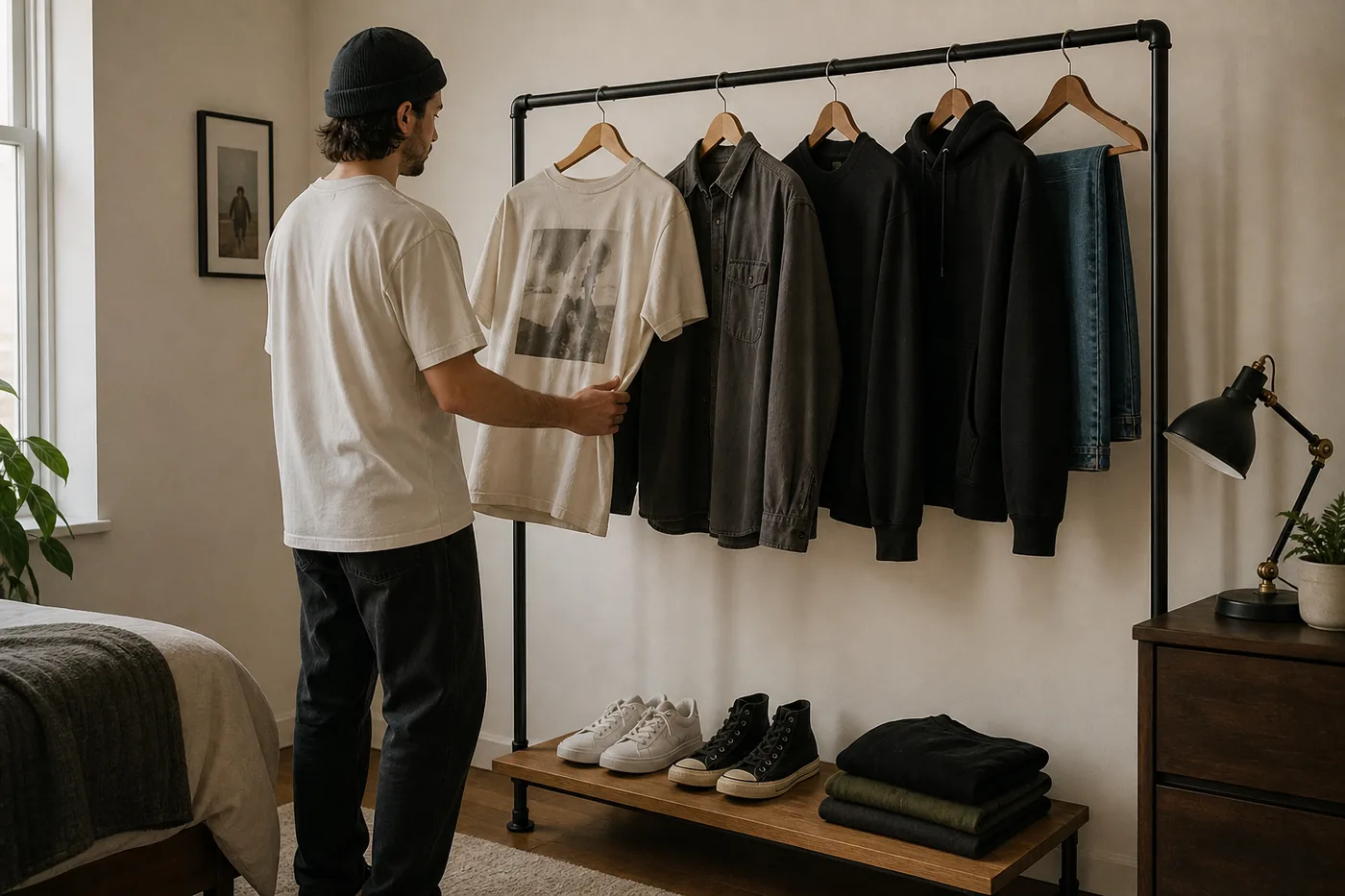
A crowded closet can still create the feeling that there is nothing to wear. Usually the problem is not a lack of clothing. It is a lack of pieces that work together and fit the life you actually have.
Audit by real situations
Think about an ordinary month: work, errands, dinner, a concert, a weekend away, and time at home. Can your closet produce two comfortable outfits for each situation? Write down the gaps before opening another shopping tab.
Use the three-outfit rule
Before buying something, name three complete outfits you can make with pieces you already own. If you cannot, the new item may create another purchase instead of solving a problem.
Track friction, not fantasy
Notice what you repeatedly avoid. Maybe the fabric feels wrong, the care is inconvenient, the fit only works from one angle, or the item needs a shoe you never wear. Those details matter more than how good it looked in the product photo.
Build around repeat players
Your most useful clothes deserve to influence future purchases. Photograph a few reliable outfits and note their colors, shapes, and layers. A good new piece should connect to that system.
Cost per wear is useful,but only if you wear it
A lower price does not make an unused item economical. A more expensive piece is not automatically a good investment. Fit, comfort, versatility, care, and honest frequency matter more than the story we tell ourselves at checkout.
Buying less is not about building a perfect minimalist wardrobe. It is about making each purchase solve a real problem and giving your favorite clothes more ways to work.
Join the conversation
Members can join the conversation. Log in to comment or create an account.